




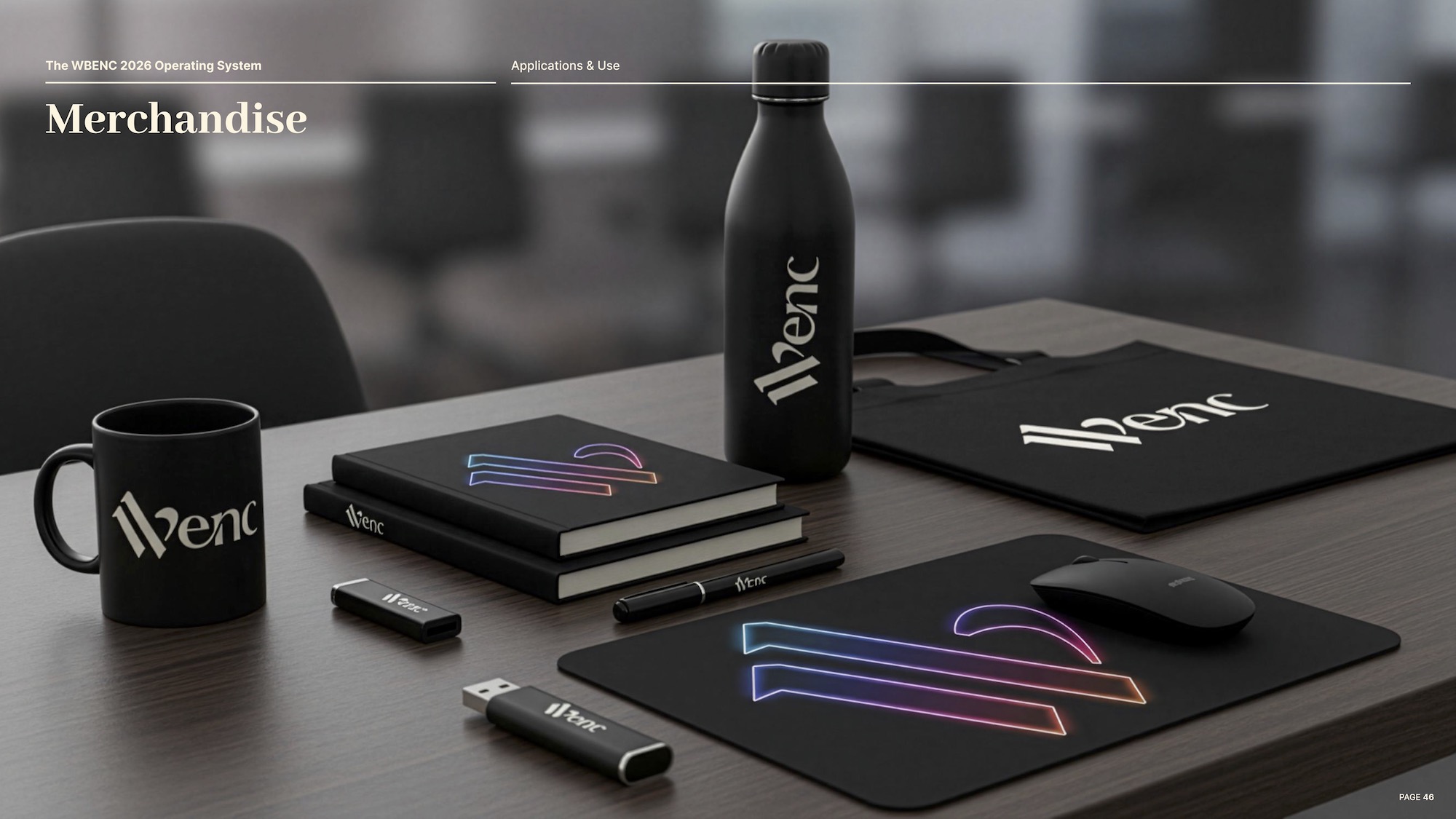
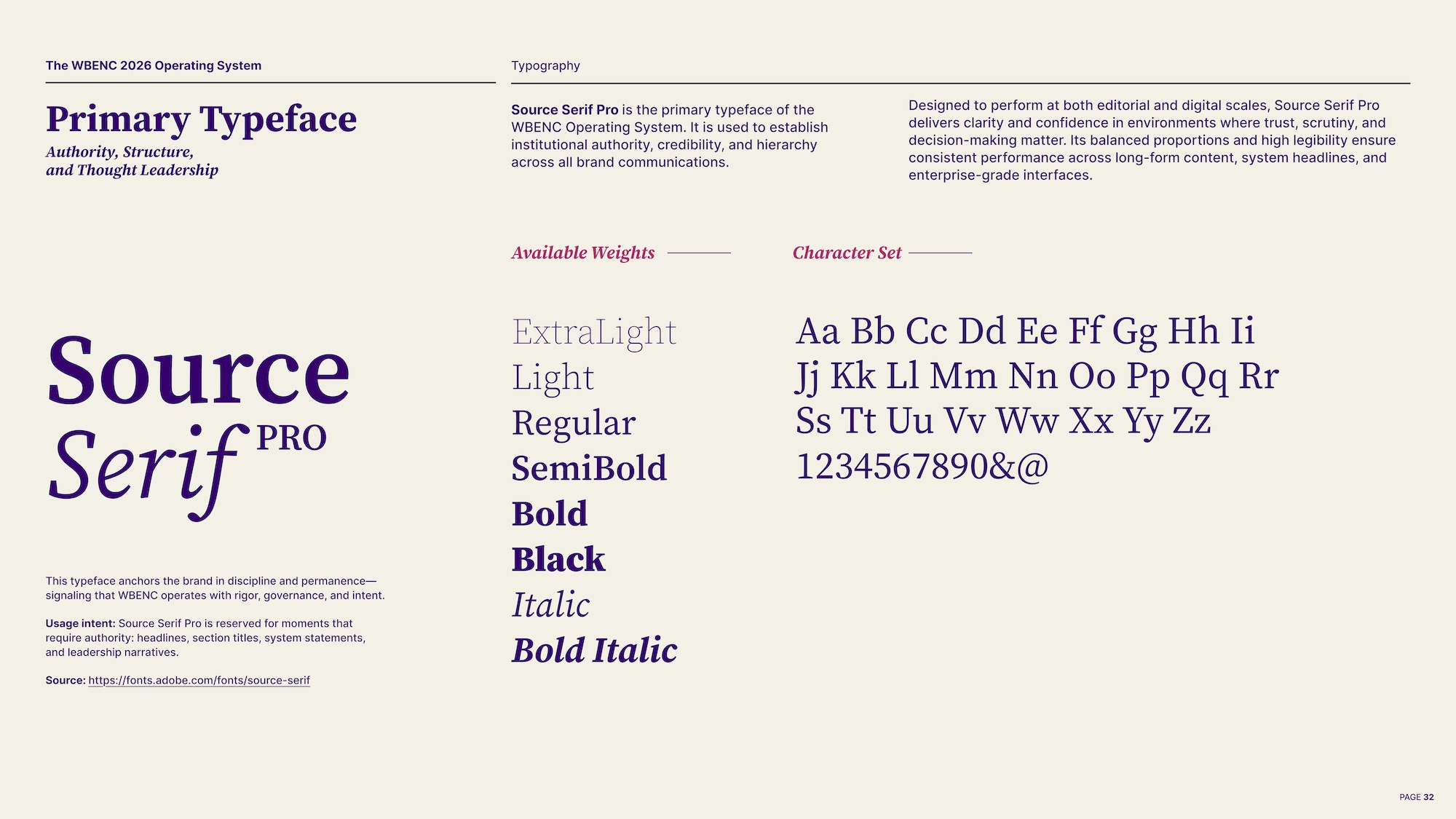

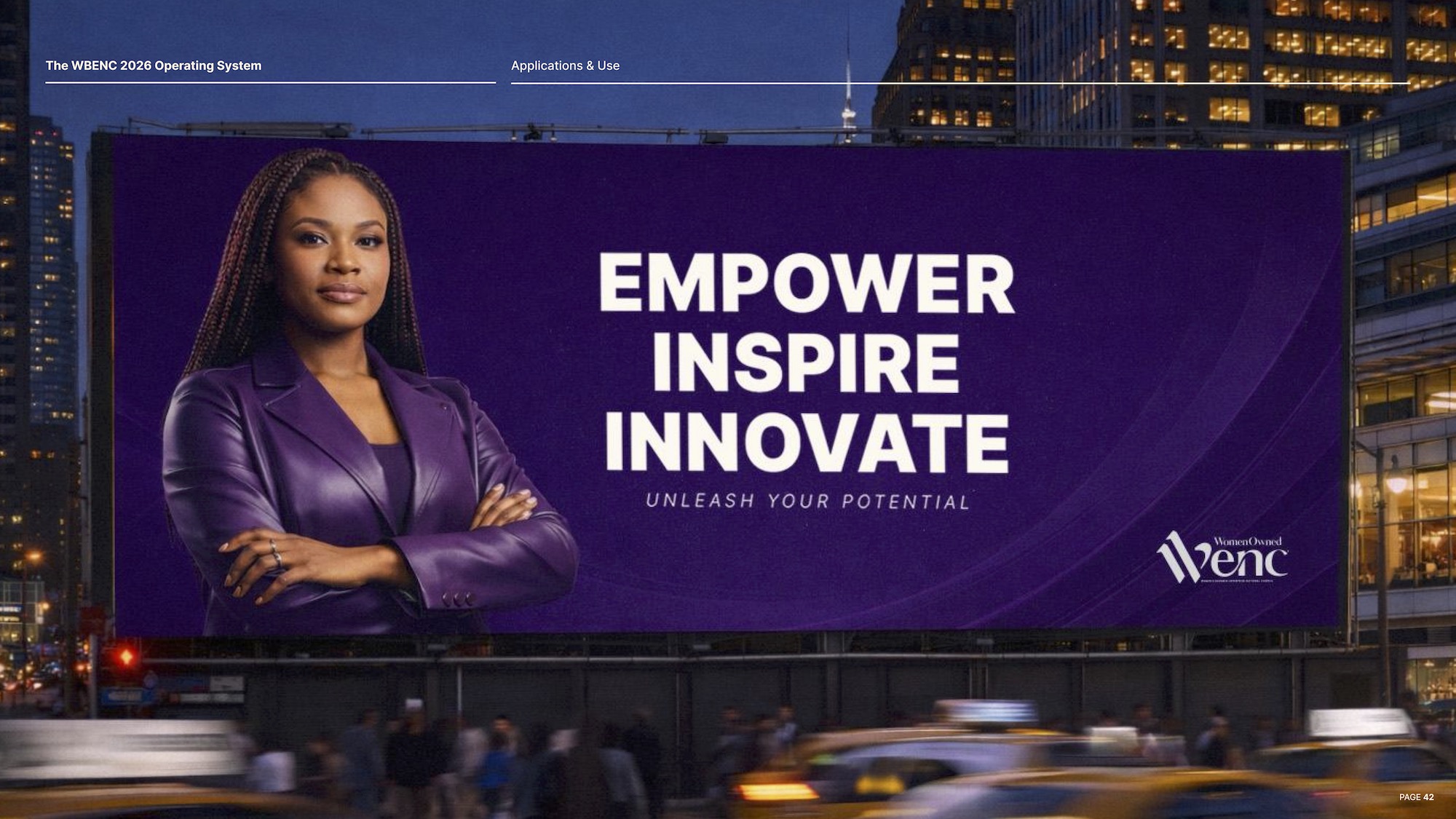

CASE STUDY: WBENC Brand Operating System
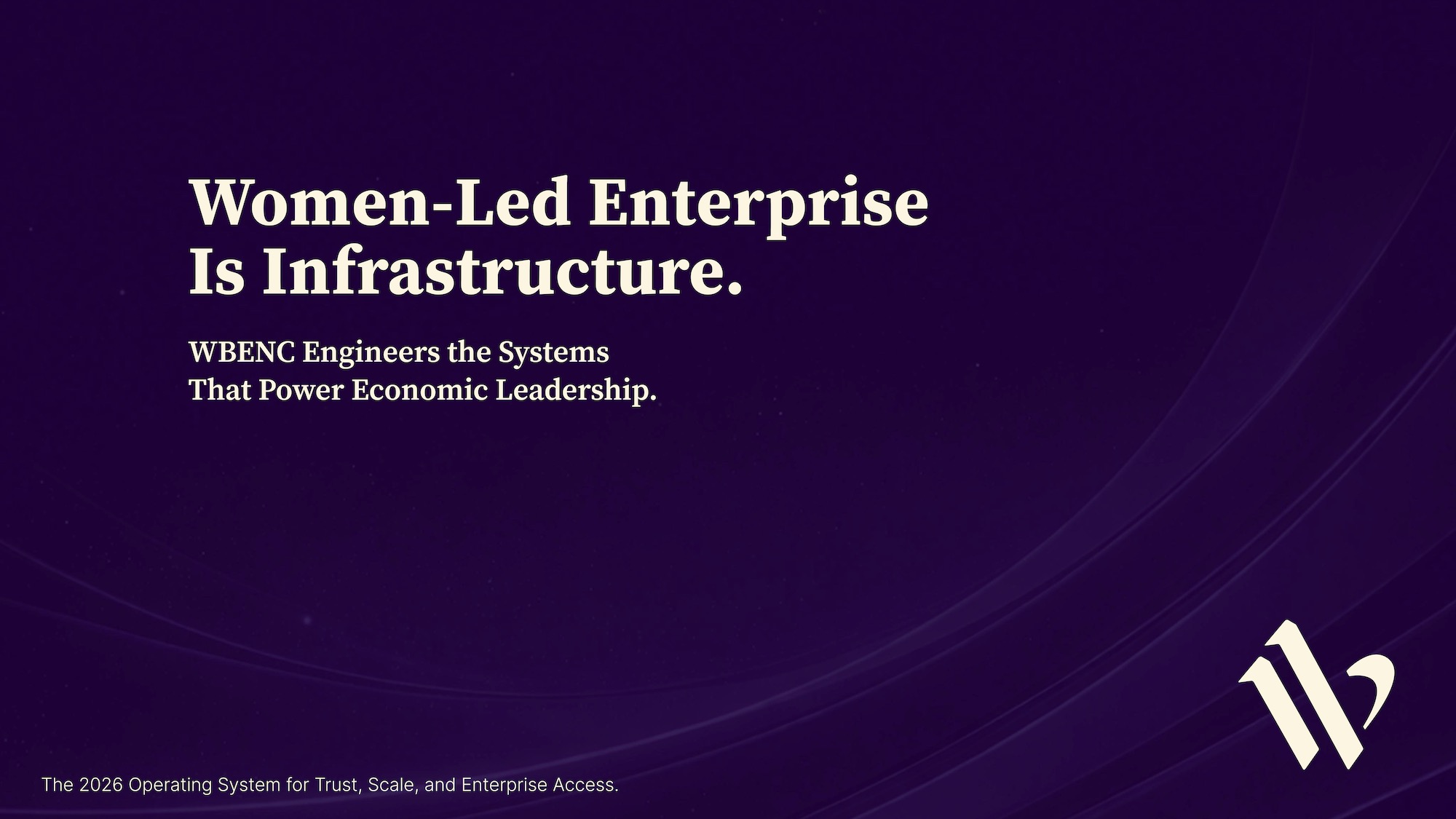
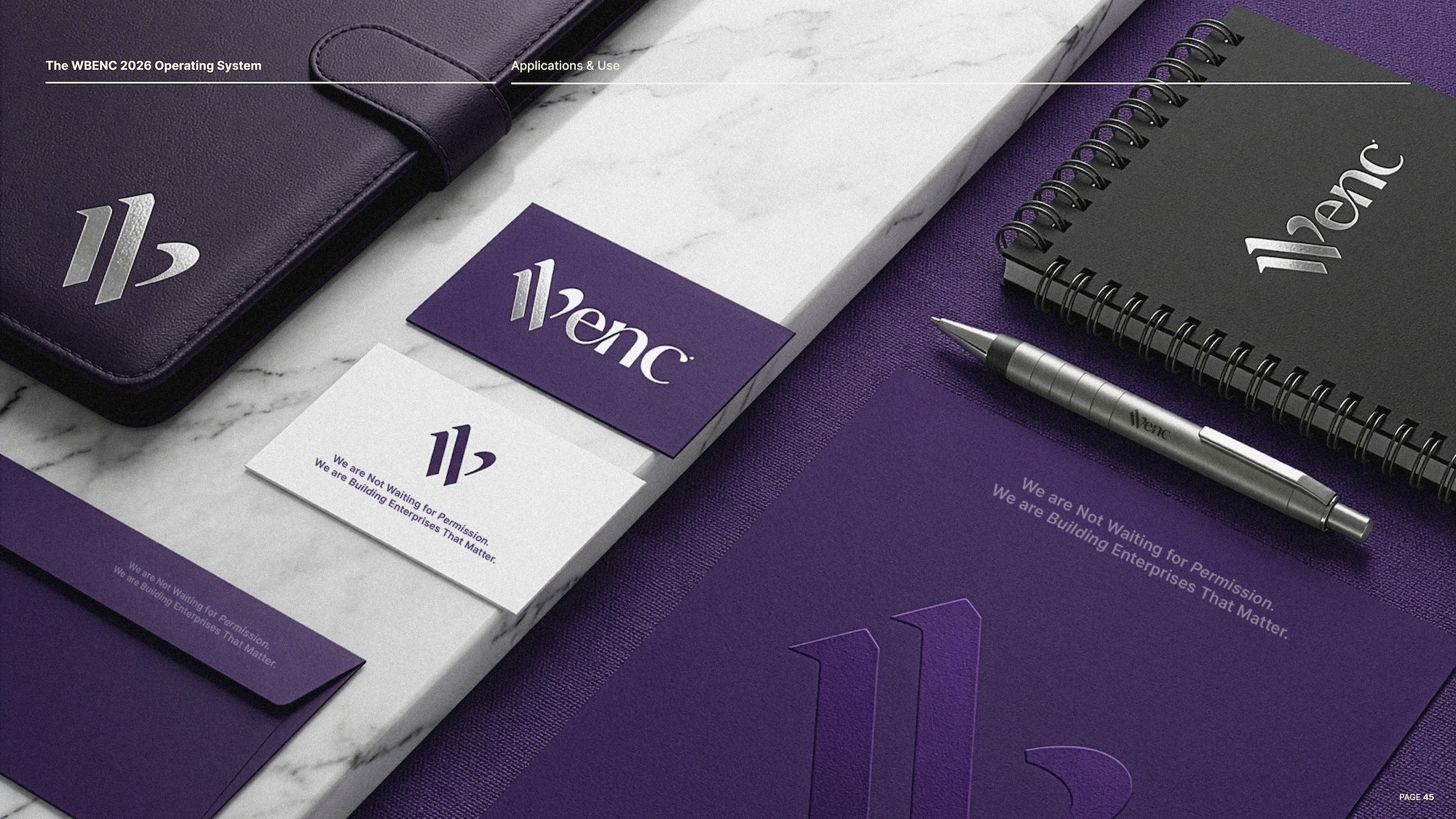
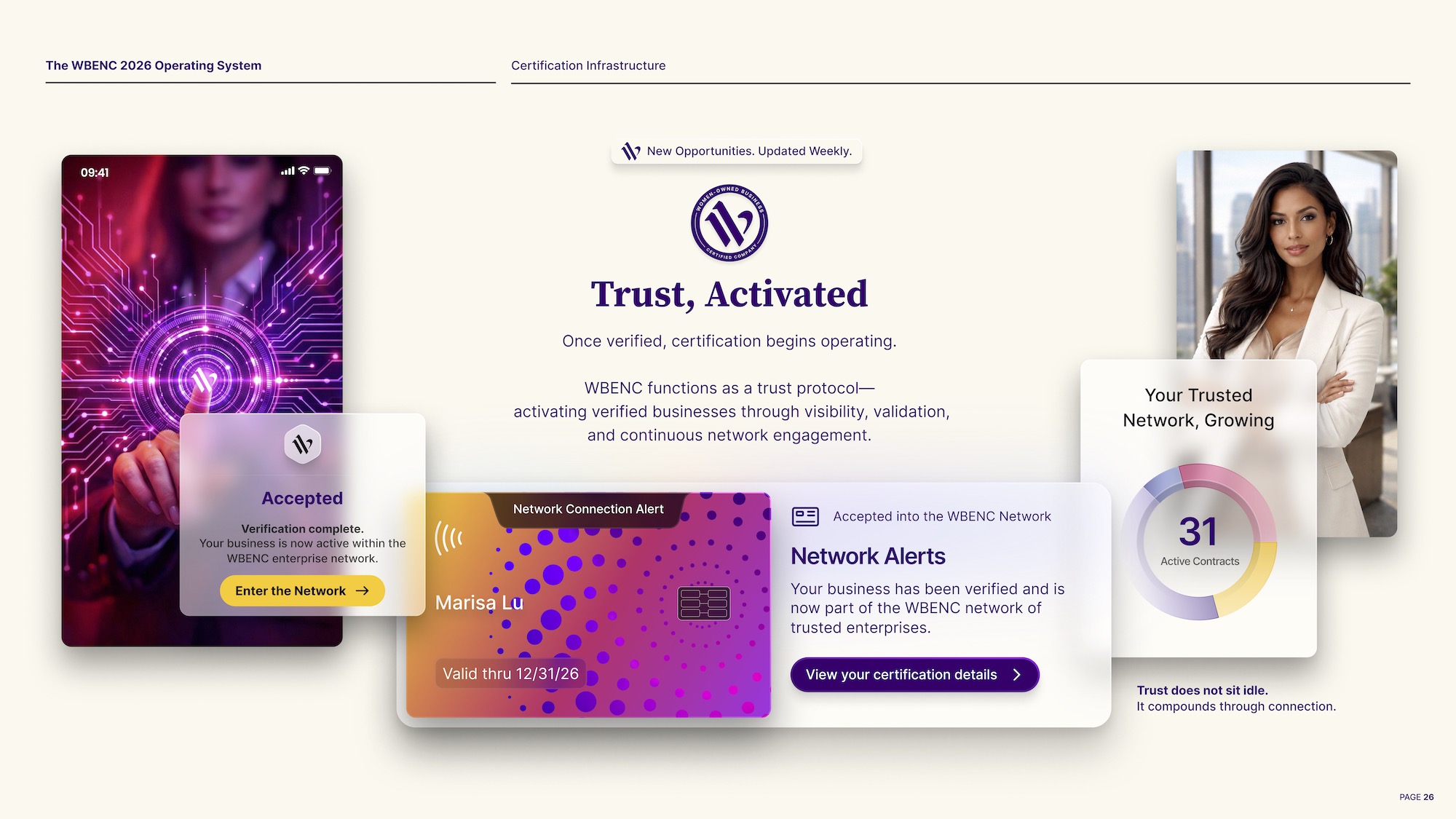
We didn’t just refresh WBENC’s look. We engineered the WBENC 2026 Operating System — a transformational brand framework built to verify trust, unlock access, and scale women-led businesses at enterprise speed and depth.
Not a style guide. Not a visual kit.
This is a governed architecture for market impact.
The challenges included:
WBENC didn’t need a redesign.
It needed a brand system capable of supporting enterprise-level complexity.
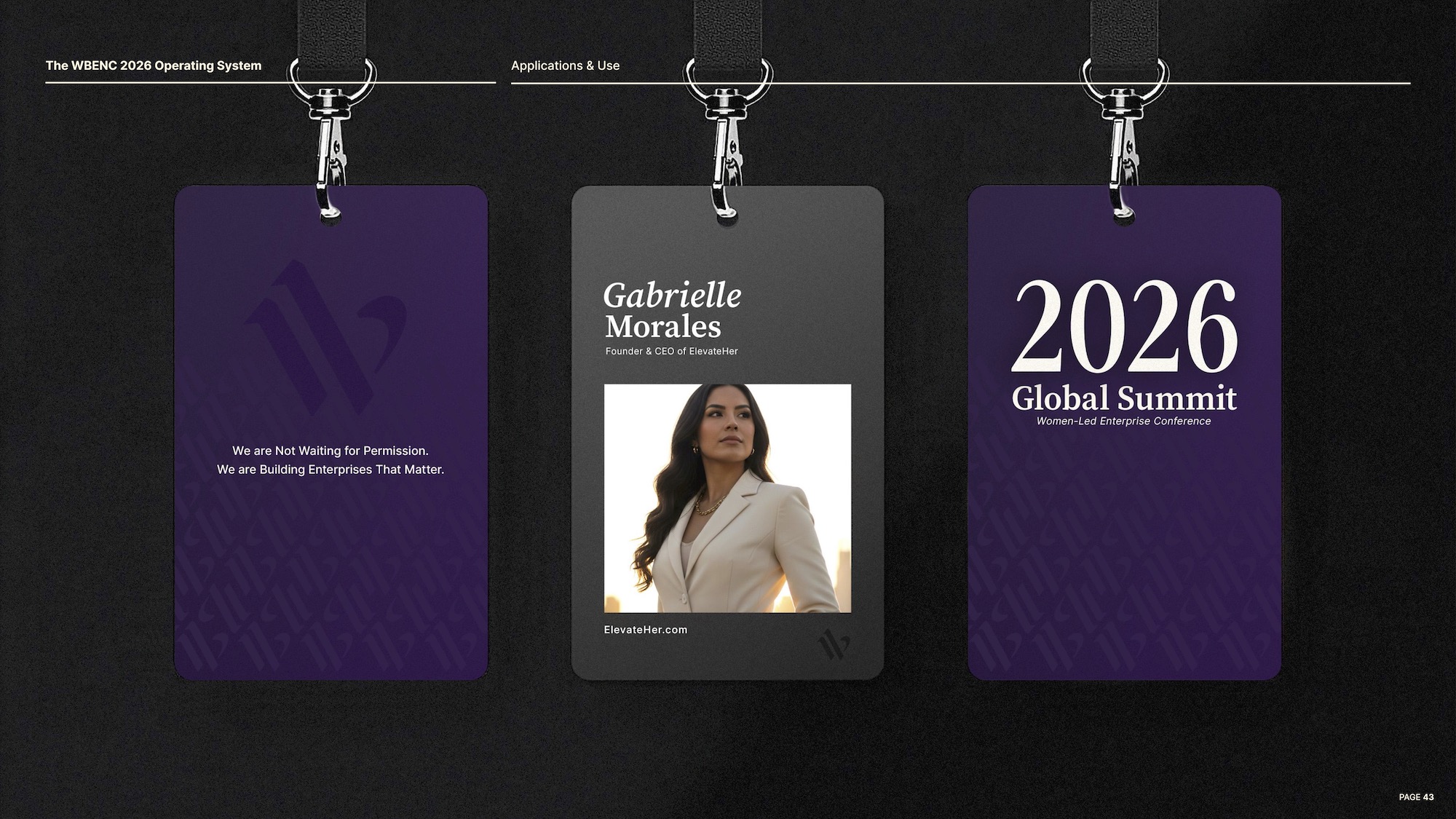
Activation & Ecosystem: The Network: A scalable design system for digital platforms, social environments, and large-scale events.
The Four Layers of the OS (Operating System):
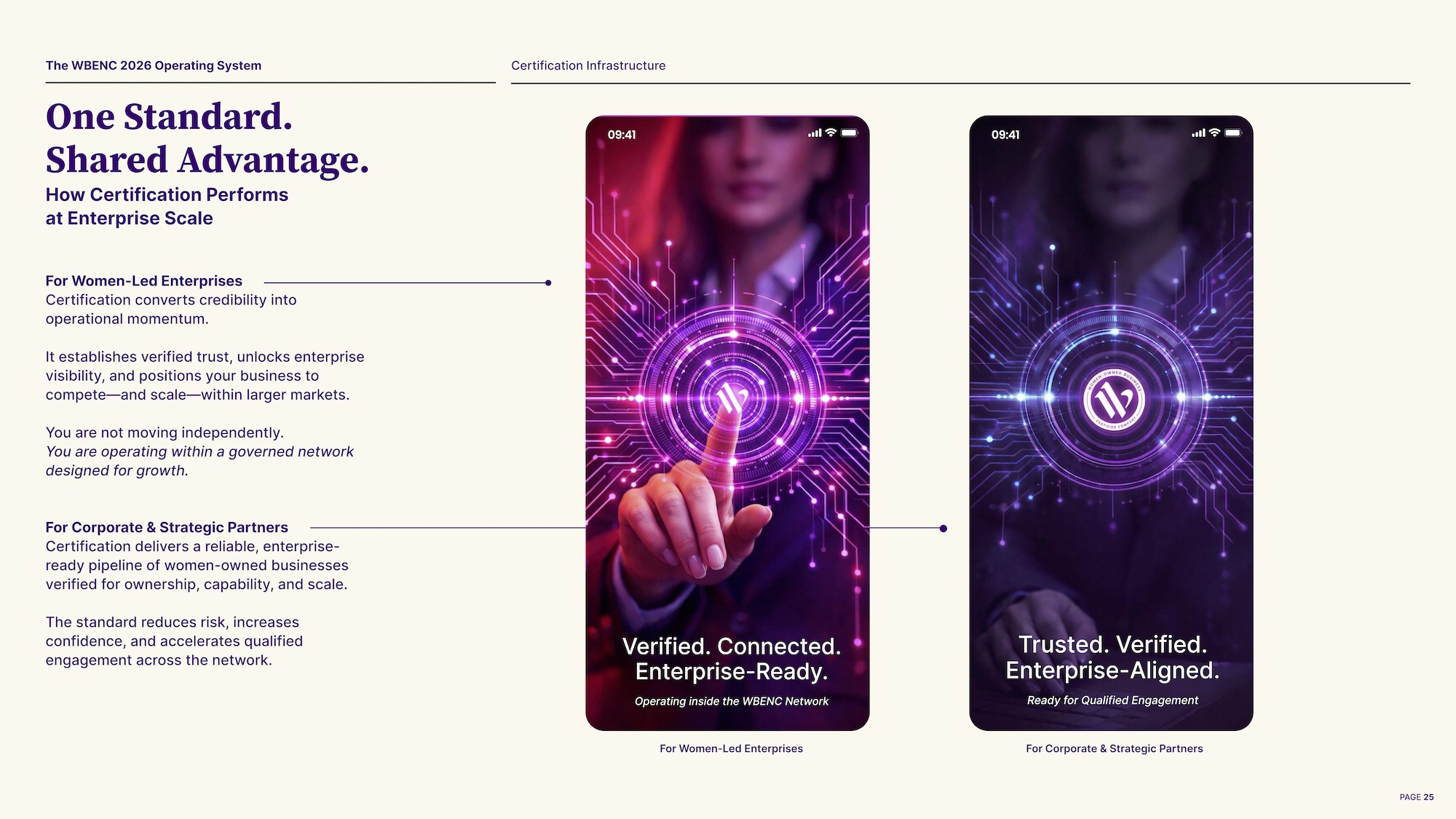
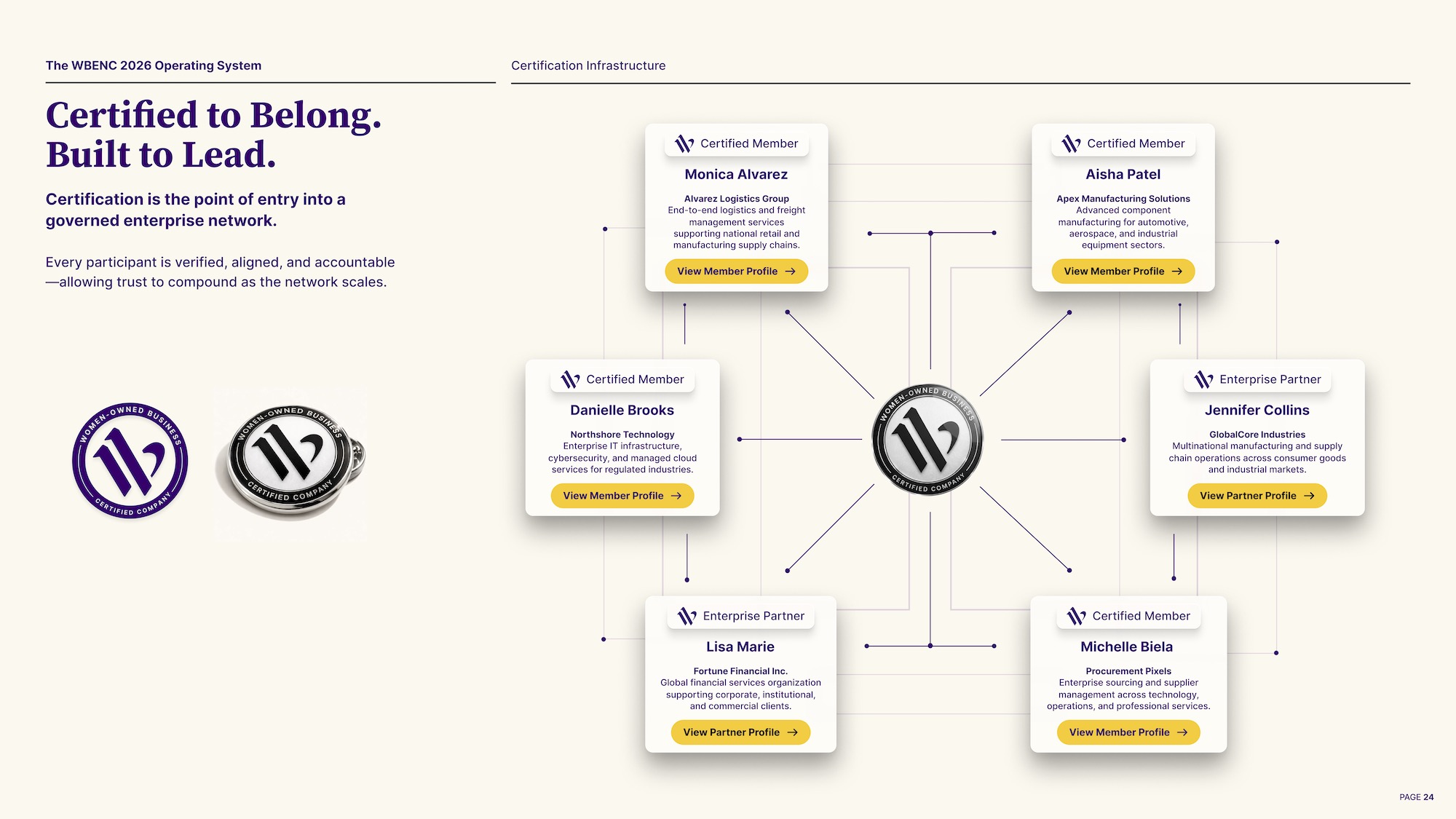
- Authority: The revamped “Certified Women-Owned” seal operates as a verified trust signal in Fortune 500 supply chains.
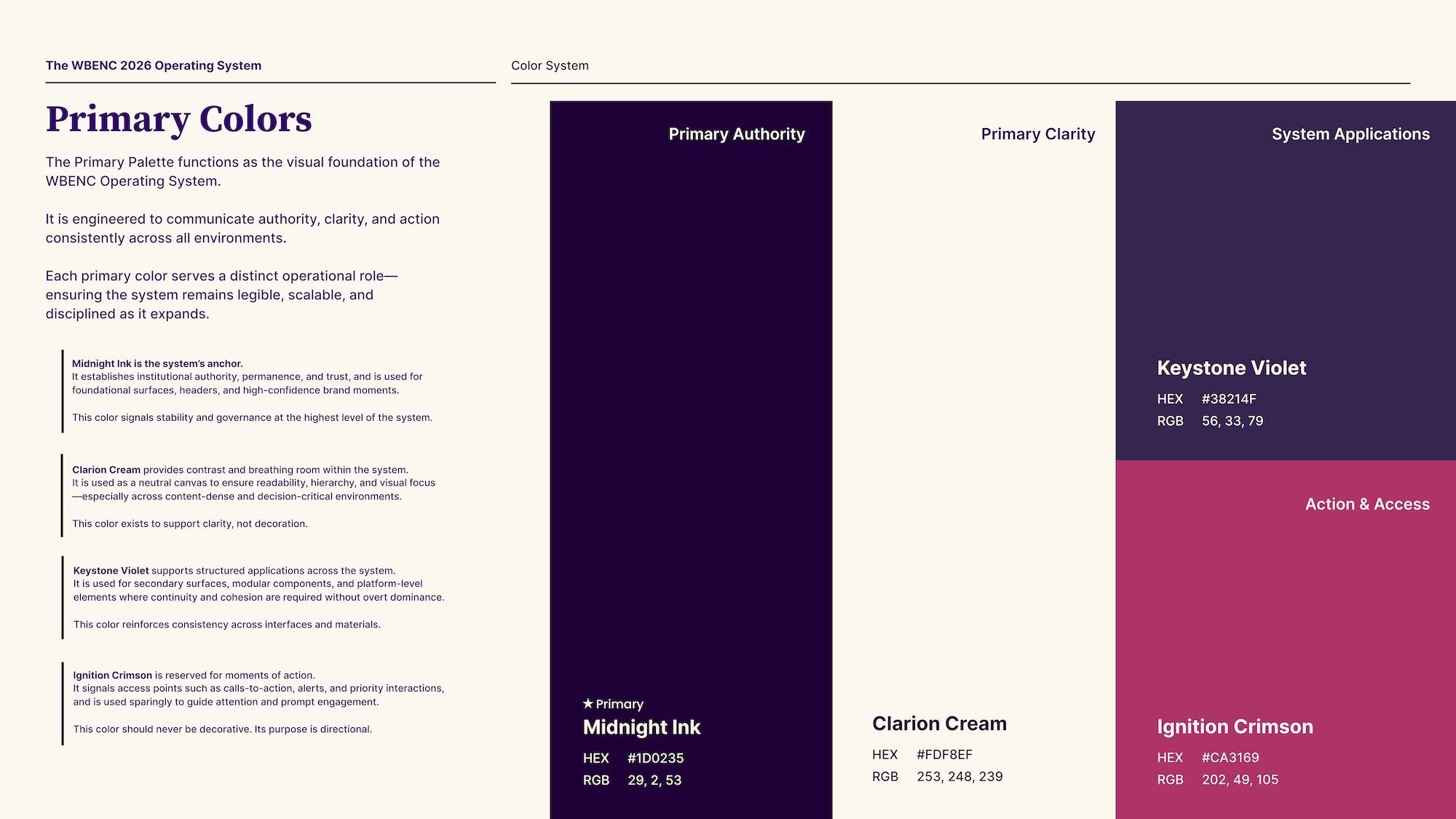
- Cohesion: Unified strategy across voice, identity, and digital application has reduced fragmentation and increased brand recognition.
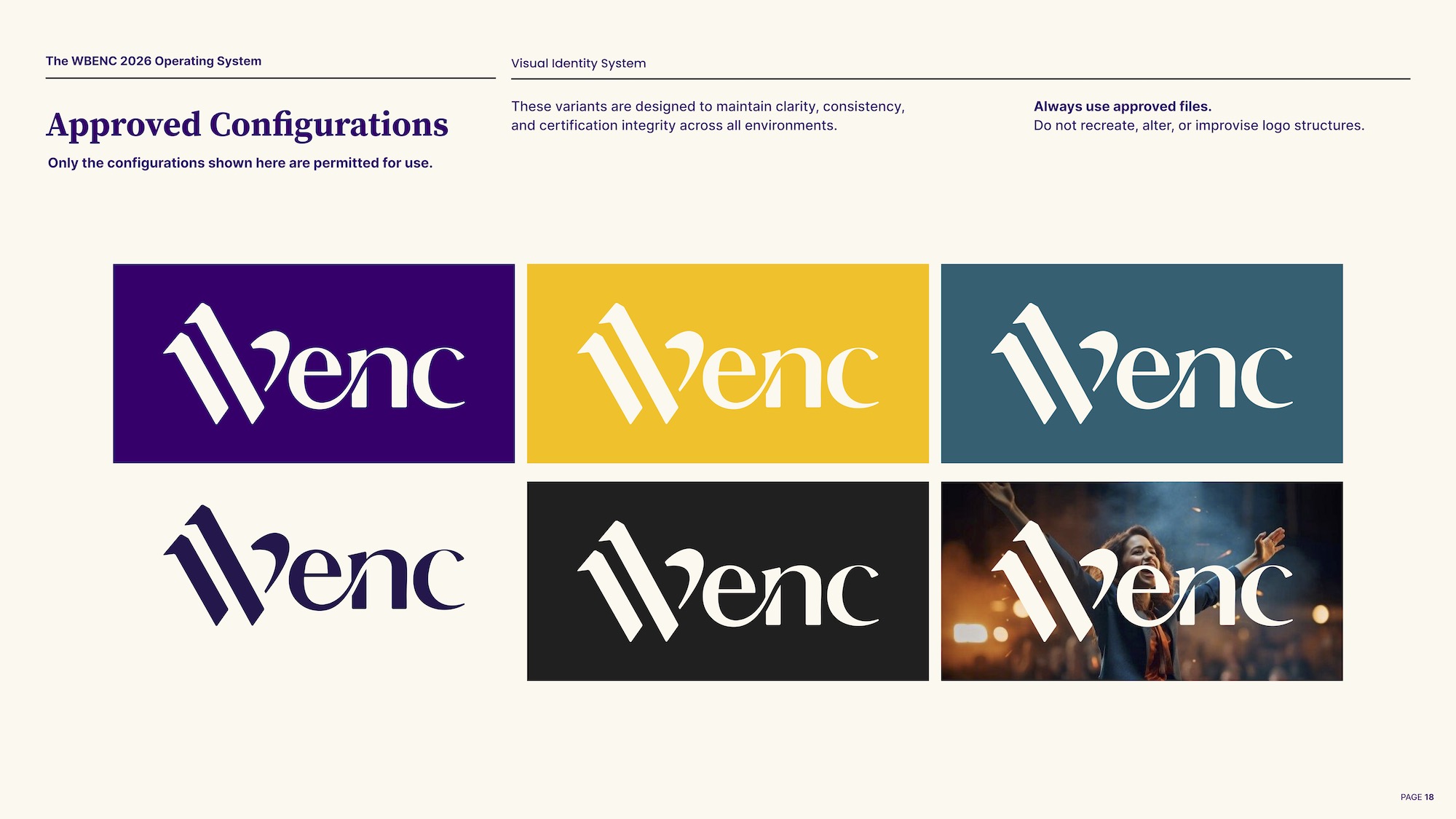
This is more than a logo. It is the infrastructure of economic leadership.
A brand operating system is a structured framework that governs how a brand functions across identity, messaging, platforms, and experiences. Unlike a visual identity alone, it supports scalability, governance, and long-term consistency.
A brand guide documents rules. A brand operating system creates infrastructure—connecting identity, UX, communication, and implementation into an integrated system.
Organizations with multiple stakeholders, platforms, chapters, partners, or programs—such as nonprofits, enterprise brands, educational institutions, and certification bodies—benefit most from structured brand systems.
We use cookies to improve your experience on our site.
By using our site, you consent to cookies.
Websites store cookies to enhance functionality and personalise your experience. You can manage your preferences, but blocking some cookies may impact site performance and services.
Essential cookies enable basic functions and are necessary for the proper function of the website.
These cookies are needed for adding comments on this website.
Google Tag Manager simplifies the management of marketing tags on your website without code changes.
Statistics cookies collect information anonymously. This information helps us understand how visitors use our website.
Google Analytics is a powerful tool that tracks and analyzes website traffic for informed marketing decisions.
Service URL: policies.google.com (opens in a new window)
You can find more information in our Cookie Policy and .