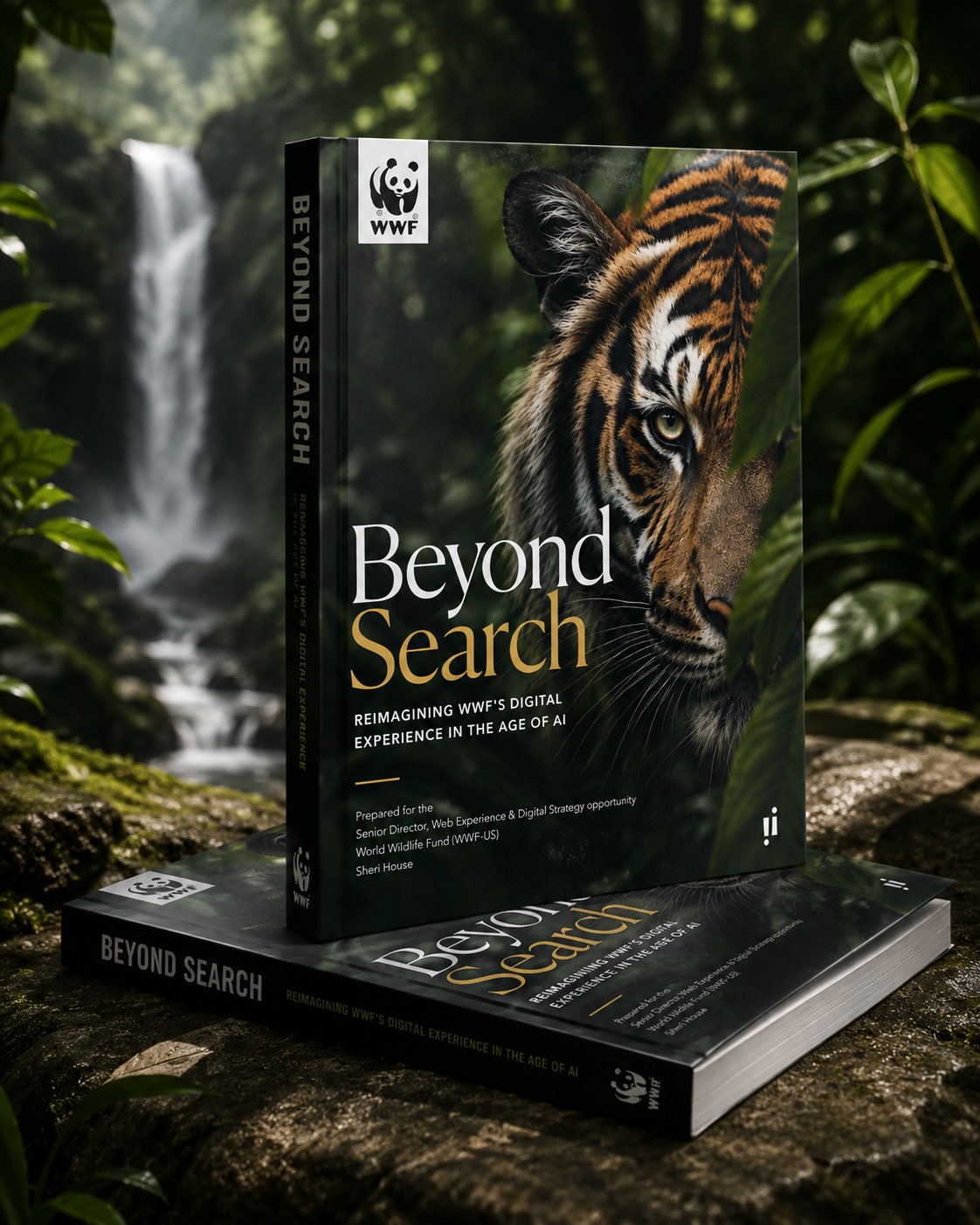
Published Thought Leadership
Commerce is more than technology
It’s human connection.
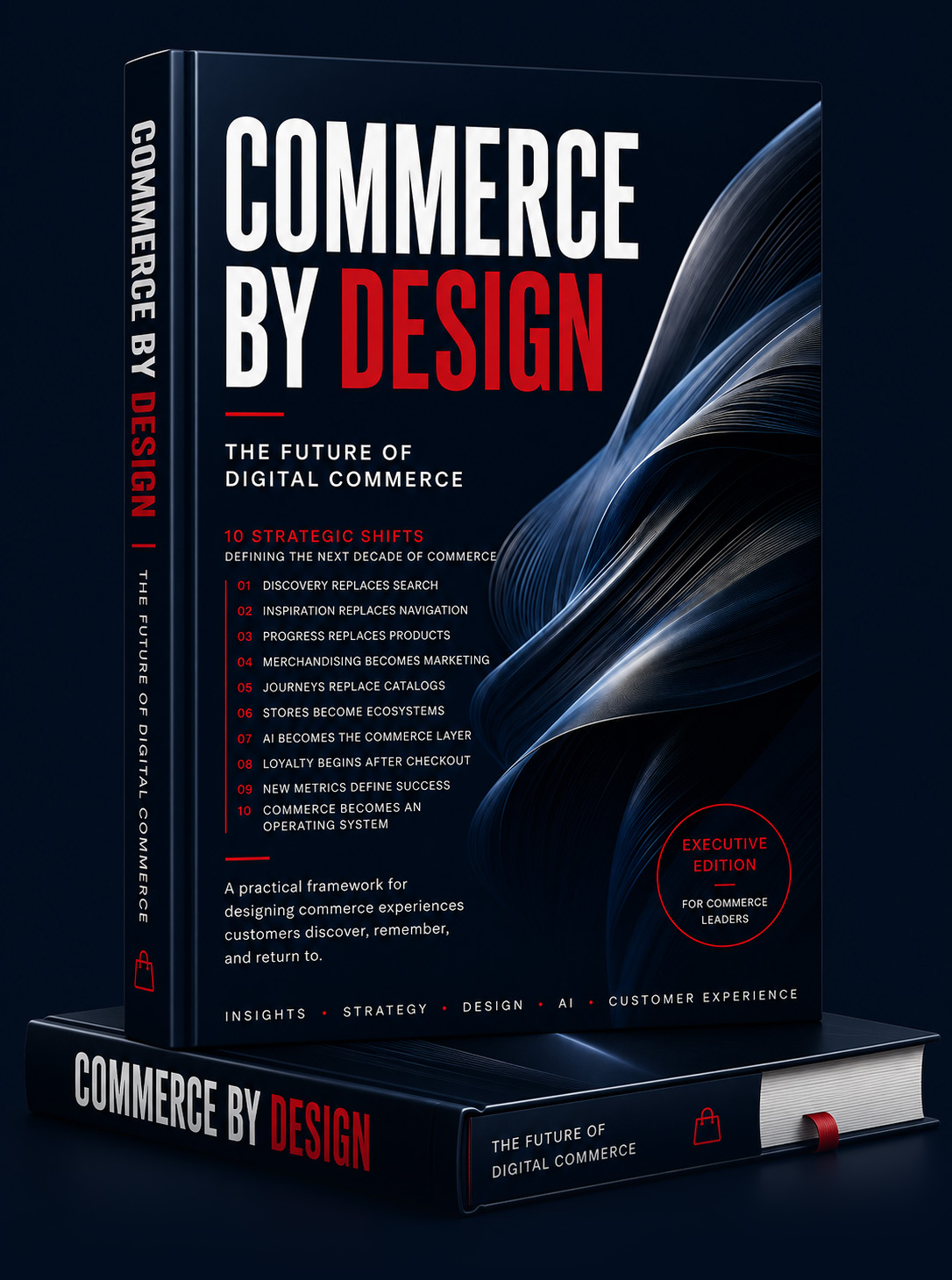
A 10-chapter framework for building better digital commerce experiences across endurance, health, and wellness brands.
— The Full Publication
Each chapter can stand alone as an article. Together, they form a complete executive framework for modern commerce leadership.
CHAPTER ONE: The Future of Product Discovery
We don’t have a product discovery problem. We have an inspiration problem. For the last decade, every conversation about product discovery has started in the same place: search bars, filters, facets, site navigation. If customers can’t find what they’re looking for, the assumption goes, the fix is better findability — smarter search algorithms, cleaner category structures, more intuitive filters.
CHAPTER TWO: Ecommerce Search
It’s solving yesterday’s problem. Every few months, another headline declares that ecommerce search is broken. Site search conversion is too low. Customers abandon after a bad query. The fix, we’re told, is always more search: better autocomplete, smarter synonym matching, AI-powered natural language queries that finally understand what the customer “really” meant.
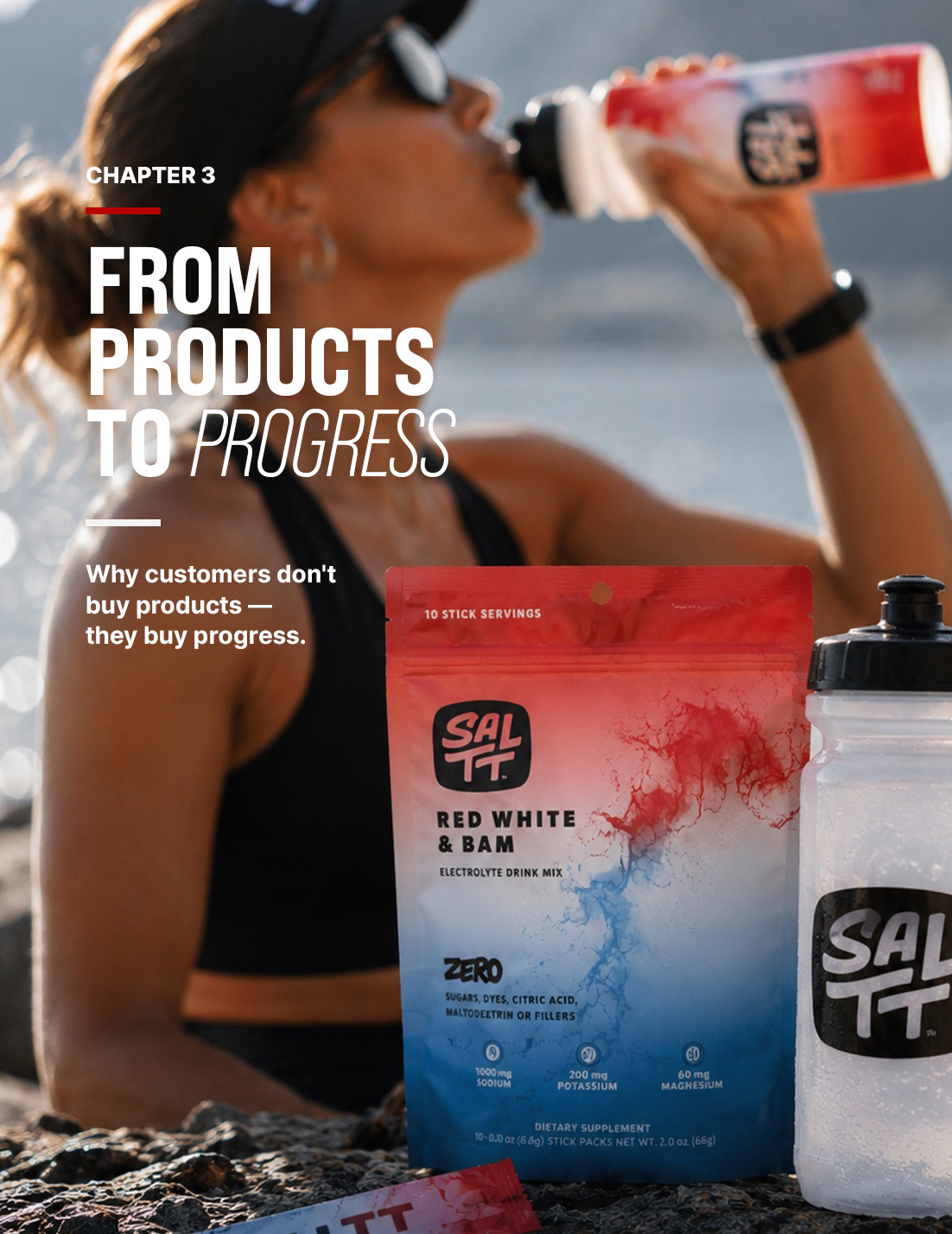
CHAPTER THREE: Ecommerce Merchandising
There’s an old line in marketing about drills and holes — nobody wants a quarter-inch drill; they want a quarter-inch hole. It’s been repeated so often that it’s become a cliché, which is a shame because most commerce experiences are still built as if it weren’t true.
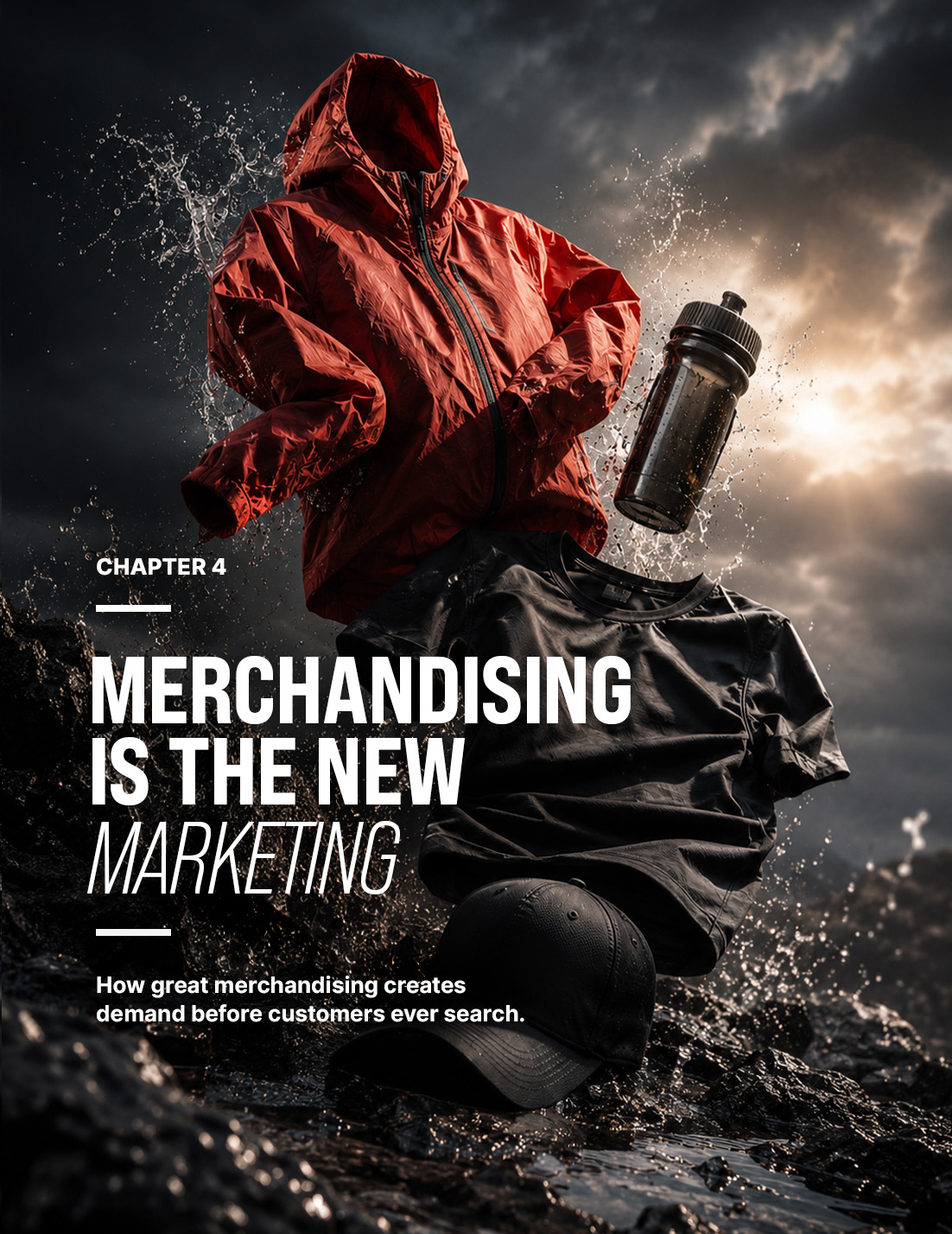
CHAPTER FOUR: Ecommerce Demand Generation
For most of my career, merchandising and marketing have lived in separate lanes with separate owners. Marketing’s job was to generate demand — get people aware, get people interested, get people to the site. Merchandising’s job started after that: take the traffic marketing sent over and arrange it well enough to convert.
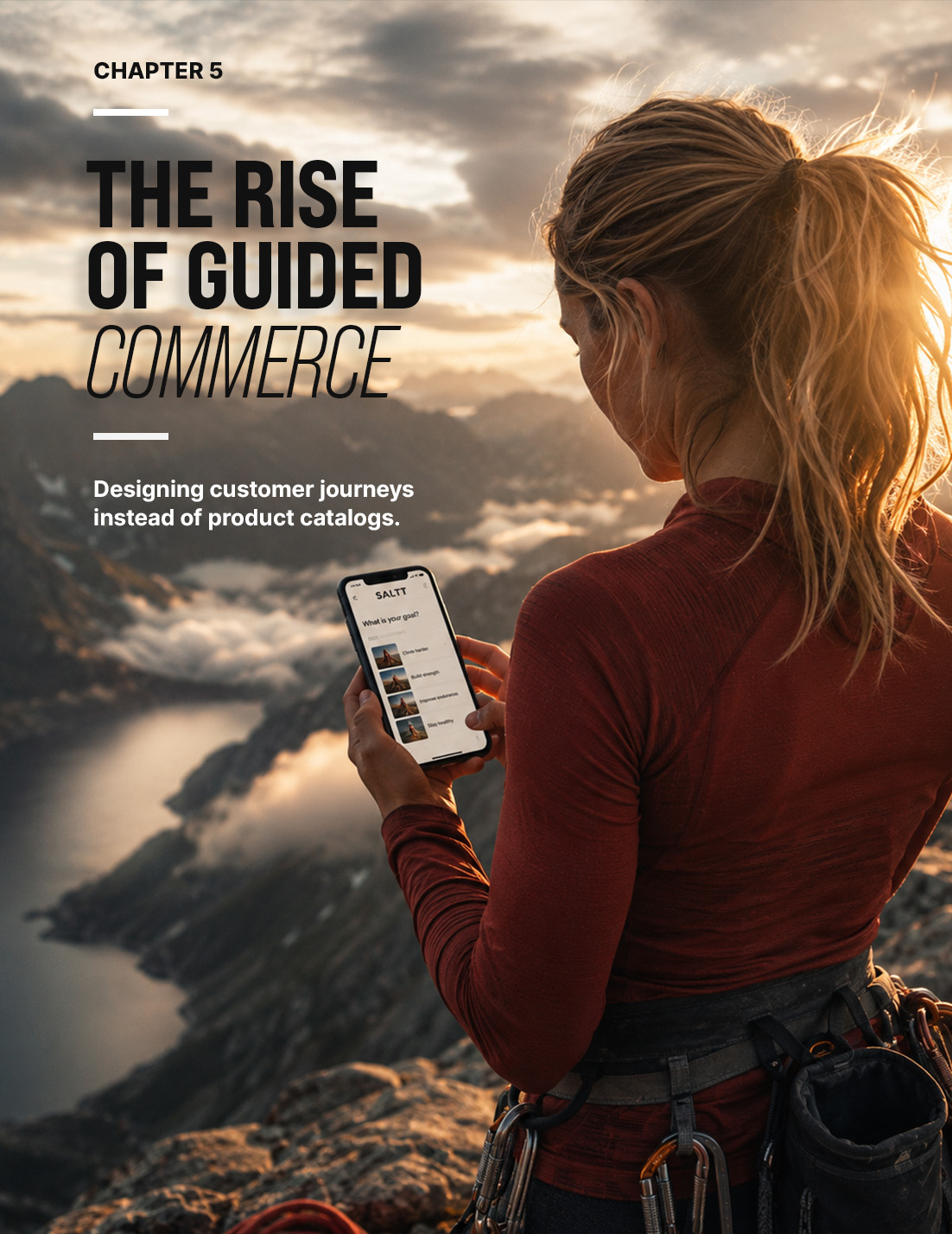
CHAPTER FIVE: Guided Commerce
Give a customer a well-organized catalog and a clear comparison chart, and you’ve solved a lot. But you’ve also left something unresolved: the customer still has to do the work of turning “here are my options” into “here’s what I should actually buy.”
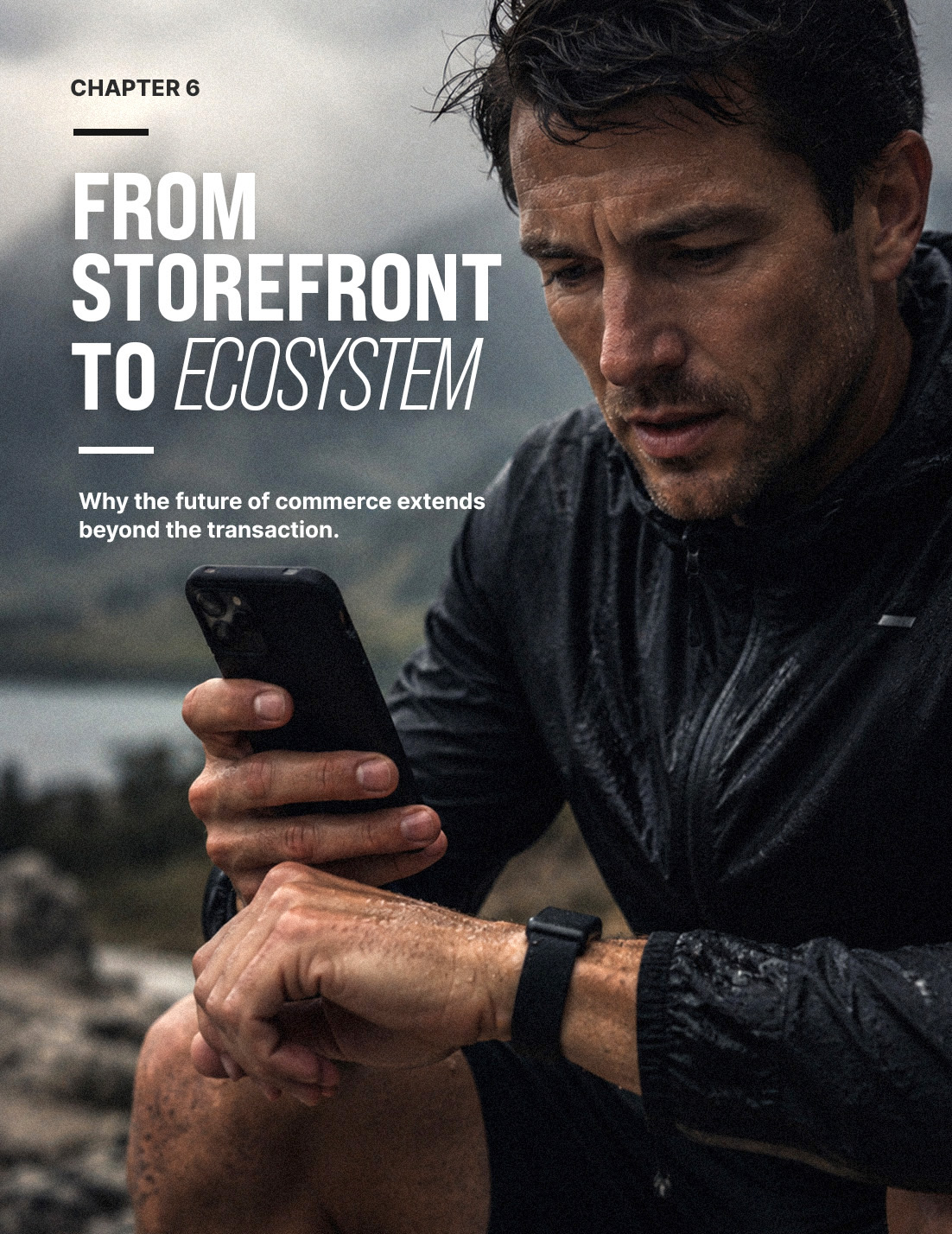
CHAPTER SIX: Brand Ecosystem
The brands pulling furthest ahead right now don’t think about their store that way at all. They don’t treat the storefront as the destination. They treat it as a single entry point into something bigger — a device, an app, a content library, a community — where the purchase is the beginning of the relationship, not the end. That’s what a real brand ecosystem looks like in practice.
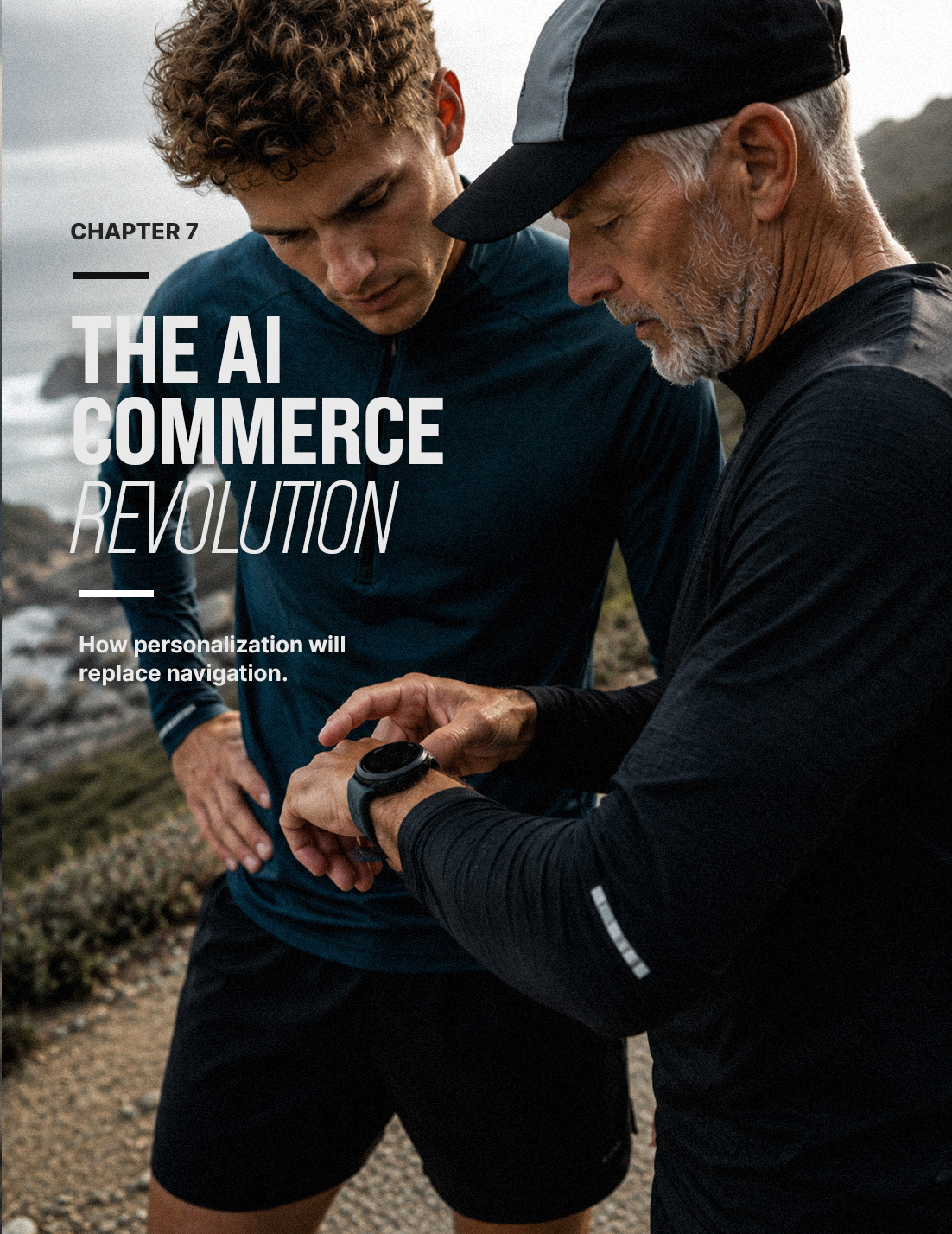
CHAPTER SEVEN: Ecommerce Personalization
Navigation exists to solve a problem: a store has more products than any one customer wants to see, so we build menus, filters, and categories to help them get to the right slice of it. Every navigation system, no matter how well designed, is fundamentally a compromise — a single structure trying to serve every visitor’s different needs at once.
CHAPTER EIGHT: Customer Lifetime Value
Almost every resource a brand has goes toward the moment before checkout. The site design, the merchandising, the guided flows, the personalization — everything we’ve covered so far in this book is aimed at getting someone to that single click. And then, for most brands, the investment just stops. An order confirmation email goes out, a shipping notification follows, and the carefully designed experience that got the customer there simply ends.
CHAPTER NINE: Ecommerce Metrics
Every chapter in this book so far describes a shift — from findability to inspiration, from search to story, from products to outcomes, from catalogs to journeys, from storefronts to ecosystems, from navigation to personalization, from checkout to lifetime relationship. And yet most commerce teams are still measuring all of it with the same handful of ecommerce metrics built for a much narrower model of the business: conversion rate, average order value, maybe a return-on-ad-spend number layered on top.
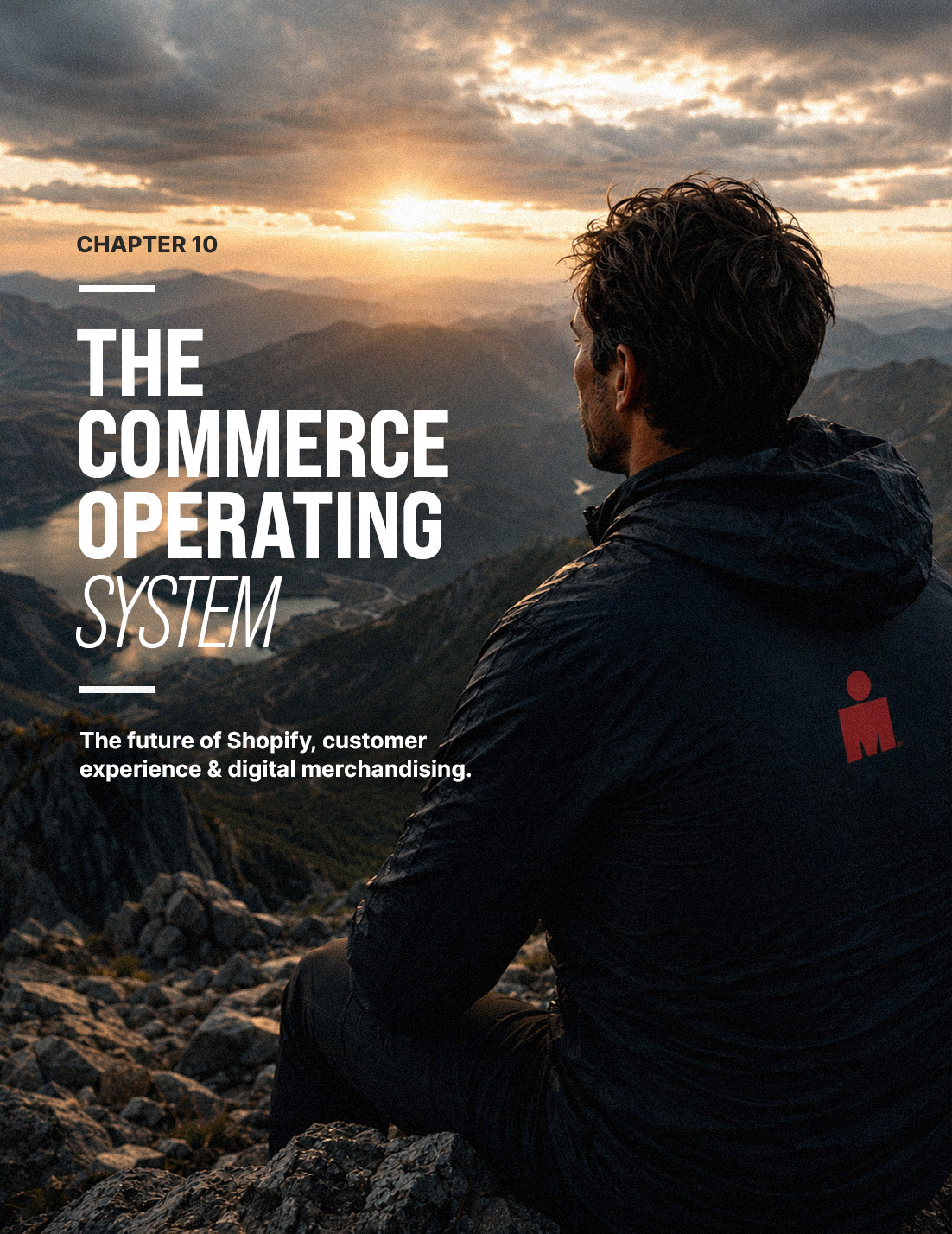
CHAPTER TEN: Commerce Operating System
Nine chapters ago, this book opened with a claim: we don’t have a product discovery problem; we have an inspiration problem. Everything since has been an argument for what follows from that one reframe — that customers arrive without fixed intent, that search is a late-stage tool, that they’re buying outcomes rather than products, that merchandising can generate demand on its own, that journeys serve them better than catalogs, that the relationship extends past the transaction, that personalization can replace navigation, that the real value shows up after checkout, and that none of it can be measured honestly with conversion rate alone.
The Full Publication
Enter your email and we’ll send the full ebook with instructions
and a private download link.
One email. No spam. Unsubscribe anytime.