
Most organizations believe they have a brand.
What they actually have is a logo, a color palette, and a few loosely followed guidelines.
In an era of complex digital ecosystems, distributed teams, and high-stakes stakeholder trust, that is no longer enough. Modern organizations don’t need better decoration — they need better infrastructure. This is where the concept of a Brand Operating System emerges.
A Brand Operating System reframes brand from something you apply visually into something you build structurally. It is the difference between a brand that looks consistent when controlled by a single designer and a brand that remains consistent when used by hundreds of stakeholders across platforms, teams, vendors, and environments.
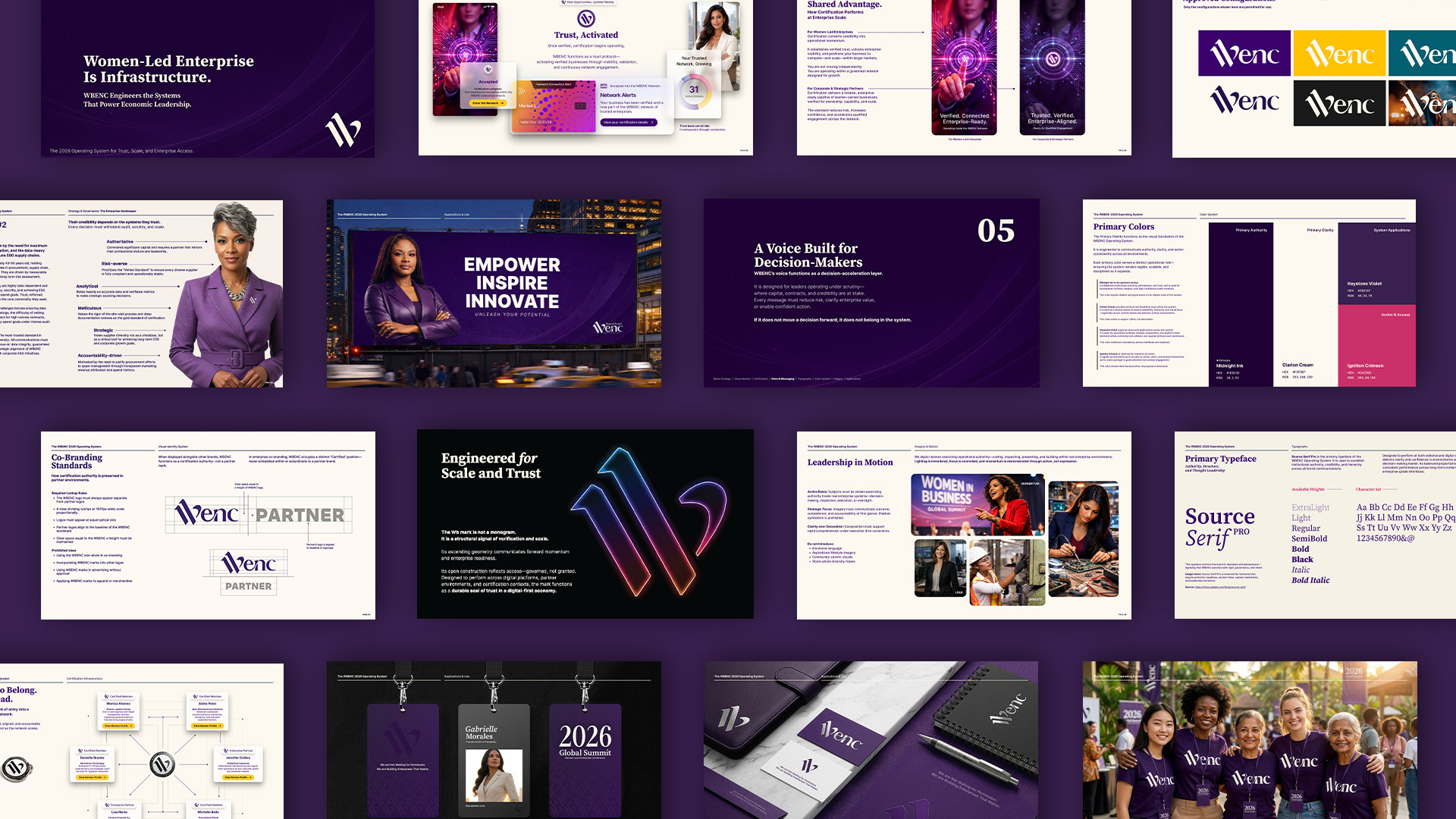
The Problem With Traditional Branding
Traditional branding models were built for a different era.
They assumed:
- One marketing team controls most outputs
- A small number of communication channels
- Limited stakeholder complexity
- Static brand expressions
Today, organizations operate in environments that are far more complex:
- Multiple internal teams producing content
- External agencies and vendors touching the brand
- Digital platforms that require systemized components
- Communities, chapters, partners, and affiliates extending the brand
- Continuous real-time communication across social, web, and product environments
Without a system underneath the visuals, brands begin to fracture.
Logos are stretched.
Colors are misused.
Messaging becomes inconsistent.
Trust erodes slowly, then visibly.
Not because people are careless — but because the brand was never designed to scale.
Defining a Brand Operating System
A Brand Operating System (Brand OS) is the infrastructure that allows a brand to function coherently across complexity.
It is not a style guide.
It is not a rebrand.
It is not just a visual identity system.
A Brand OS is a structured framework that governs how brand decisions are made, how brand assets are utilized, how experiences are perceived across touchpoints, and how consistency is maintained over time.
You can think of it as:
- The architecture behind the brand
- The logic that connects every expression
- The governance that protects integrity
- The modularity that enables flexibility
The infrastructure that supports scale
Just as modern software products rely on design systems and operating systems to function reliably, modern brands require similar underlying frameworks.
What a Real Brand Operating System Includes
A true Brand Operating System goes far beyond aesthetics. It typically includes:
- Identity Architecture
A clear structure defining how sub-brands, programs, certifications, offerings, and partnerships relate to the core brand. This prevents confusion and reinforces hierarchy and clarity. - Governance Framework
Rules, principles, and ownership models that define how the brand evolves, who makes decisions, and how consistency is enforced across teams and partners. - Modular Visual System
Not static templates, but flexible components: grids, layout logic, typographic hierarchy, color usage rules, and composable structures that can adapt without breaking cohesion. - Messaging Architecture
Clear narrative logic, voice principles, and content hierarchy that guide how the organization communicates across contexts.
Digital & Platform Readiness
A Brand OS must work seamlessly across:
- Websites and platforms
- Social systems
- Presentations and executive materials
- UX environments
- Events and physical environments
Documents, certifications, and official assets
Experience Consistency
Beyond visuals, the system defines how the brand should be perceived: as clear, authoritative, warm, trustworthy, credible, ambitious, restrained, or energetic.
The outcome is a brand that behaves like a system rather than a collection of assets.