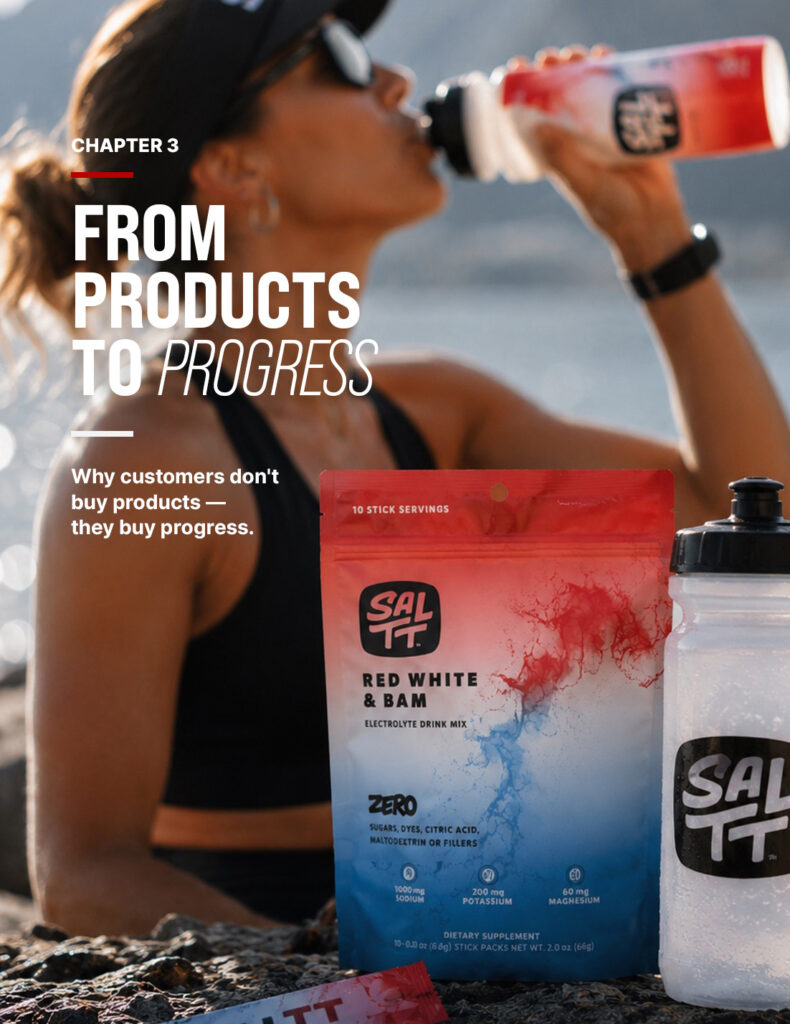
From Products to Progress
Why customers don’t buy products—they buy progress.
There’s an old line in marketing about drills and holes — nobody wants a quarter-inch drill; they want a quarter-inch hole. It’s been repeated so often that it’s become a cliché, which is a shame because most commerce experiences are still built as if it weren’t true.
Walk through almost any store’s navigation, and you’ll find the same structure: products organized by what they are. Category. Subcategory. Ingredient. Format. It’s a taxonomy built for the merchandiser’s convenience, not the customer’s goal.
And it quietly assumes something that isn’t true for most shoppers: that they came in already thinking in product terms. They didn’t. They came in thinking about a problem, a feeling, or a goal — better sleep, more energy, faster recovery, less pain. The product is just the mechanism. What they’re actually shopping for is the outcome on the other side.
The Old Model: E-commerce Merchandising by What a Product Is
Most catalogs are organized around internal logic — how the business thinks about its own inventory — rather than the logic a customer is actually using when they show up. A supplement brand is grouped by ingredient. A gear brand is grouped by product type. It’s tidy, it’s easy to manage, and it’s completely disconnected from how someone actually arrives at the decision to buy.
This isn’t a small mismatch. It means the store is speaking a different language than the customer is thinking in. Someone who wants to stop cramping during a long training run isn’t thinking “I need magnesium glycinate.” They’re thinking, “I need this to stop happening.” If the store only speaks in ingredient names and SKUs, it’s making that person do the translation work themselves — and a lot of them won’t bother.
This is really just a commerce application of a much older idea. Harvard Business School’s Jobs to Be Done research makes the same point about products generally: people don’t buy things; they “hire” them to make progress in a specific circumstance. E-commerce merchandising built around ingredients or SKUs is optimized for the hire, not the job.
The Shift: Ecommerce Merchandising by What It Does for the Customer
The brands getting this right have flipped the organizing principle entirely. Instead of “here is our product line,” the store says “here is the outcome you’re after — here’s what gets you there.” The catalog becomes a menu of outcomes, with the product sitting quietly underneath as the vehicle.
Field Note — SALTT
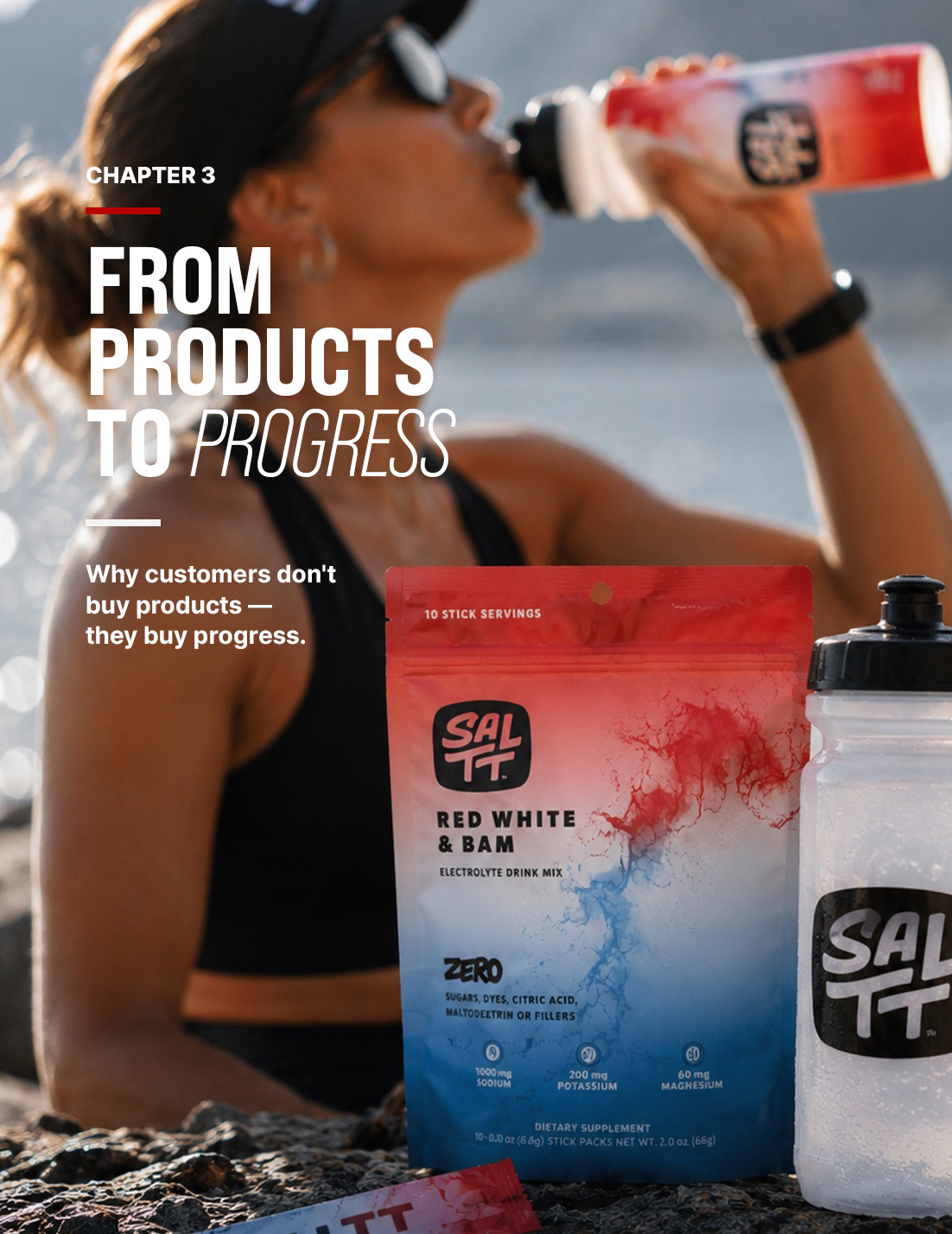
I saw this clearly while studying SALTT, an electrolyte brand built around hydration for keto, endurance, and POTS-related needs. Instead of organizing around SKUs or ingredients, their merchandising leads with a benefits framework — sections built around Increased Energy, Better Sleep, Stop Muscle Cramps, Mental Clarity, Faster Recovery.
A customer doesn’t have to know anything about electrolyte formulation to shop there. They just have to know what they want to feel, and the store meets them exactly at that point.
That’s a genuinely different information architecture than most commerce sites default to, and it’s not cosmetic — it changes what the customer has to do to find their way in. Instead of “know the product category,” the only requirement is “know the goal.” That’s a much lower bar, and it’s the bar most customers are actually standing at.
Why This Matters More Than It Looks Like It Does
This shift isn’t just about making navigation friendlier. It changes what the store is for. A catalog organized by product type positions the brand as an inventory list — here’s what we sell; go find what you need. A catalog organized by outcome positions the brand as something closer to a guide.
"Products are the how. Progress is the why. The stores that lead with why stop feeling like a catalog and start feeling like a guide."
That distinction compounds. A customer who buys because they matched a SKU to a need they already fully understood has a transactional relationship with the brand. A customer who buys because the brand helped them name and solve a problem they hadn’t fully articulated yet has something closer to trust. The second kind of relationship survives price comparison. The first kind doesn’t.
There’s also a practical merchandising benefit: outcome-based organization naturally supports cross-selling in a way product-type organization doesn’t. If someone shops “Better Sleep” and the answer involves two products working together, that pairing makes sense within the outcome frame. If the store is organized by product type, that same pairing requires the customer to already understand the relationship between two separate categories.
This is also a useful diagnostic for any brand unsure whether its own catalog is customer-facing or merely internal. Read your top-level navigation out loud and ask whether it sounds like something a customer would say about their own life, or something an inventory manager would say about a warehouse.
What To Do Differently
The starting question isn’t “how do we categorize our products?” It’s “what is our customer actually trying to become, feel, or achieve” — and then building the navigation, merchandising, and content around that, with products surfacing underneath as the means to get there.
For endurance and wellness brands, this reframe is almost always available because the category is inherently outcome-driven to begin with. Nobody buys electrolytes, recovery tools, or training gear as an end in itself — everyone buying in this space is chasing some version of performance, resilience, or relief.
Products are the how. Progress is the why. The ecommerce merchandising that leads with why is what turns a catalog into a guide.