We don’t have a product discovery problem. We have an inspiration problem.
For the last decade, every conversation about product discovery has started in the same place: search bars, filters, facets, site navigation. If customers can’t find what they’re looking for, the assumption goes, the fix is better findability — smarter search algorithms, cleaner category structures, more intuitive filters.
I’ve sat in enough strategy meetings to know this is where the conversation always goes. And I’ve come to believe it’s the wrong conversation entirely.
Findability assumes the customer already knows what they want. It assumes intent exists before the visit — that somewhere in their head is a fully formed idea of the product, and our job is to get them to it faster. But that’s not how most people actually shop anymore, and if I’m honest, it’s not how most people ever really shopped. We just built commerce tools that only worked if it were true.
The real gap in product discovery isn’t findability. It’s inspiration. Customers don’t arrive knowing exactly what they want; they arrive with a goal, a mood, an aspiration — and they’re hoping the brand in front of them will help shape that into something specific. When it doesn’t, we call it a discovery problem and go fix the search bar. But the search bar was never broken. The customer just had nothing to search for yet.
The Old Model: Discovery as Findability
Traditional ecommerce architecture was built for a world where the customer walks in with intent already formed — like a hardware store customer who knows they need a 3/8″ drill bit. The entire structure exists to get them to that exact item as efficiently as possible: category, subcategory, filter, product page, cart.
This model isn’t wrong. It’s just incomplete. It works beautifully for the percentage of visits where someone truly does know what they want. But it does almost nothing for the much larger group of visitors who show up without a fixed idea — the ones browsing, dreaming, comparing, gathering inspiration for a goal they haven’t fully defined yet. For that group, a search bar is a dead end, not a doorway.
You can’t search for something you don’t have language for yet. Baymard Institute’s research on ecommerce product lists and category navigation backs this up — after benchmarking major retail sites, they found that product-finding tools are consistently among the most overlooked parts of the shopping experience, despite being the gateway from search to the product page.
Most brands respond to poor conversion from this group by optimizing the tools built for the wrong problem — better autocomplete, smarter synonyms, more granular filters. It’s a bit like tuning the engine of a car that’s parked at the wrong destination.
The Shift: Discovery as Inspiration
The brands pulling ahead right now aren’t the ones with the best search. They’re the ones that treat discovery as an act of inspiration first, and product-finding second. They understand that before a customer can search, they need a reason to want something — and that reason rarely comes from a product grid.
This is where merchandising, content, and storytelling stop being “extra” and become the actual discovery mechanism. Instead of asking customers to already know their goal, the store surfaces possibility: here’s what training for your first race looks like, here’s what a recovery routine could be, here’s the setup other people like you have built. The customer doesn’t need to know what they want when they walk in — the experience helps them figure it out.
Field Note — IRONMAN Store Rebuild
I got to build exactly this recently, in a full strategic concept for the IRONMAN Store Rebuild. The instinct going in was the one every retailer defaults to: organize by category, tighten the search, streamline the funnel. But endurance athletes don’t think in departments. They think in goals, races, and training phases.
So the concept flipped the model — athlete-first navigation organized around goals and race disciplines rather than retail categories, and a discovery layer built entirely around content: race-day stories, training moments, creator content, all doubling as shoppable inspiration before a customer ever forms a search query. One part of that concept was literally called “Shop the Feed” — the idea that a training story or a race-day photo is the real entry point to product discovery, not the category page underneath it.
Why This Matters More Than It Looks Like It Does
It’s tempting to file this under “content marketing” and move on. It’s not that. This is an architectural decision about what a store is actually for. A store built for findability optimizes for customers who already made up their mind somewhere else — which means every dollar spent on paid acquisition is really just buying traffic for a decision the brand had no hand in shaping. A store built for inspiration participates in that decision. It’s the difference between being a vending machine and being a guide."Findability gets you a sale. Inspiration gets you a relationship."
What To Do Differently
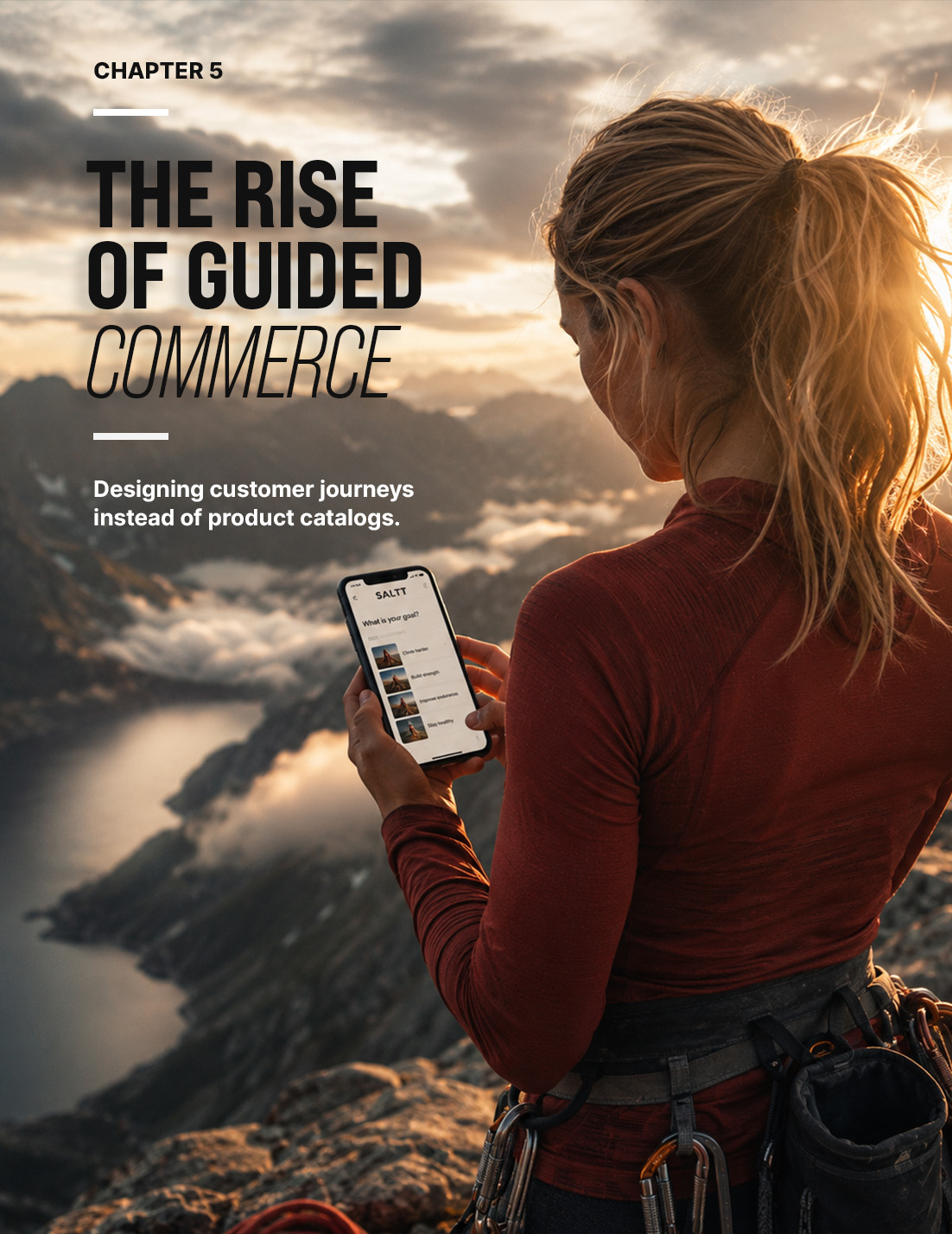
If your store’s discovery strategy still lives entirely in search and navigation, the fix isn’t a bigger search budget. It’s asking a more uncomfortable question: what does a customer need to see before they know what to search for? For some brands, that’s editorial content. For others, it’s guided quizzes, curated bundles, or stories built around outcomes rather than SKUs. The specific mechanism varies by category — but the underlying move is the same. Stop assuming intent. Start building it.
The moment you accept that most customers arrive without a fixed idea, product discovery stops being a search problem to optimize and becomes a story to tell.